When I first moved to France to study, my flatmate studied geology. Field trips with his research group were a regular occurrence. Sometimes he came home with an assortment of rocks; other times, the stories involved digging holes and examining soils and roots.
While preparing our dissertations and presentations, we occasionally acted as each other’s audience, practising how to explain our research. I still remember one of the questions he was investigating: how does black poplar growing along France’s Allier River respond to mechanical stress from flowing water?
Research he contributed to was published in 2017 in Géomorphologie : relief, processus, environnement. It found differences in the aboveground and belowground traits of black poplar saplings growing in different locations. At the more exposed upstream end of an alluvial bar—the bar-head—saplings had shorter, more flexible stems and stronger root systems. At the less exposed bar-tail, they grew taller and had different root characteristics. The paper also discussed how these traits relate to sediment trapping and landform development.[1]
What intrigued me was that the same species could develop differently in different parts of a river—and that the plants could, in turn, modify their surroundings.
Later, after moving to Bordeaux to live and work, I often wished my flatmate were there when I visited vineyards. Faced with a soil profile, a collection of stones or exposed roots, I would have had plenty of questions.
I approach the producers I work with in much the same way. The more I learn about a winery, the more I want to understand. A vineyard description, an explanation of root growth or a passing reference to a particular rock can open up a question I had never previously considered.
Soil is one such subject.
When introducing wines, we regularly talk about limestone, volcanic soils and alluvial soils. Some producers go further, describing the bedrock—the solid rock beneath the soil and other loose surface materials. But how does that information connect with the aromas, acidity and texture in our glasses? When we describe a wine as “mineral”, what exactly are we describing?
I recently came across geologist Alex Maltman’s discussions of these questions and looked into his 2025 book, Taste the Limestone, Smell the Slate: A Geologist Wanders Through the World of Wine. For someone who regularly discusses soils at work, the title alone was enough to spark my curiosity.
I went on to read several of his articles and related research. This is my attempt to bring together some of those ideas and share what they made me reconsider. I distinguish between the authors’ arguments, research findings and my own interpretation; the sources are listed at the end for anyone who would like to read further.
A Geologist Who Also Grows Grapes and Makes Wine
Alex Maltman is Emeritus Professor of Earth Sciences at Aberystwyth University in Wales. Alongside his geological research, he grew vines and made wine as a hobby, becoming increasingly interested in the science involved.
As explanations linking vineyard geology to wine flavour became more prominent, those interests converged around a question: through what mechanisms do rocks and soils influence wine? Since retiring in 2018, he has devoted more time to writing and speaking about the subject.[2]
His Vineyards, Rocks, and Soils: The Wine Lover’s Guide to Geology, published by Oxford University Press in 2018, provides a systematic introduction to geological concepts encountered in wine. His 2025 book takes the form of self-contained essays, allowing readers to start with whichever subject interests them.[3][4]
The distinction I found most useful is this: soil influencing wine and a drinker literally tasting a particular rock are separate propositions.
Understanding Bedrock Through Water
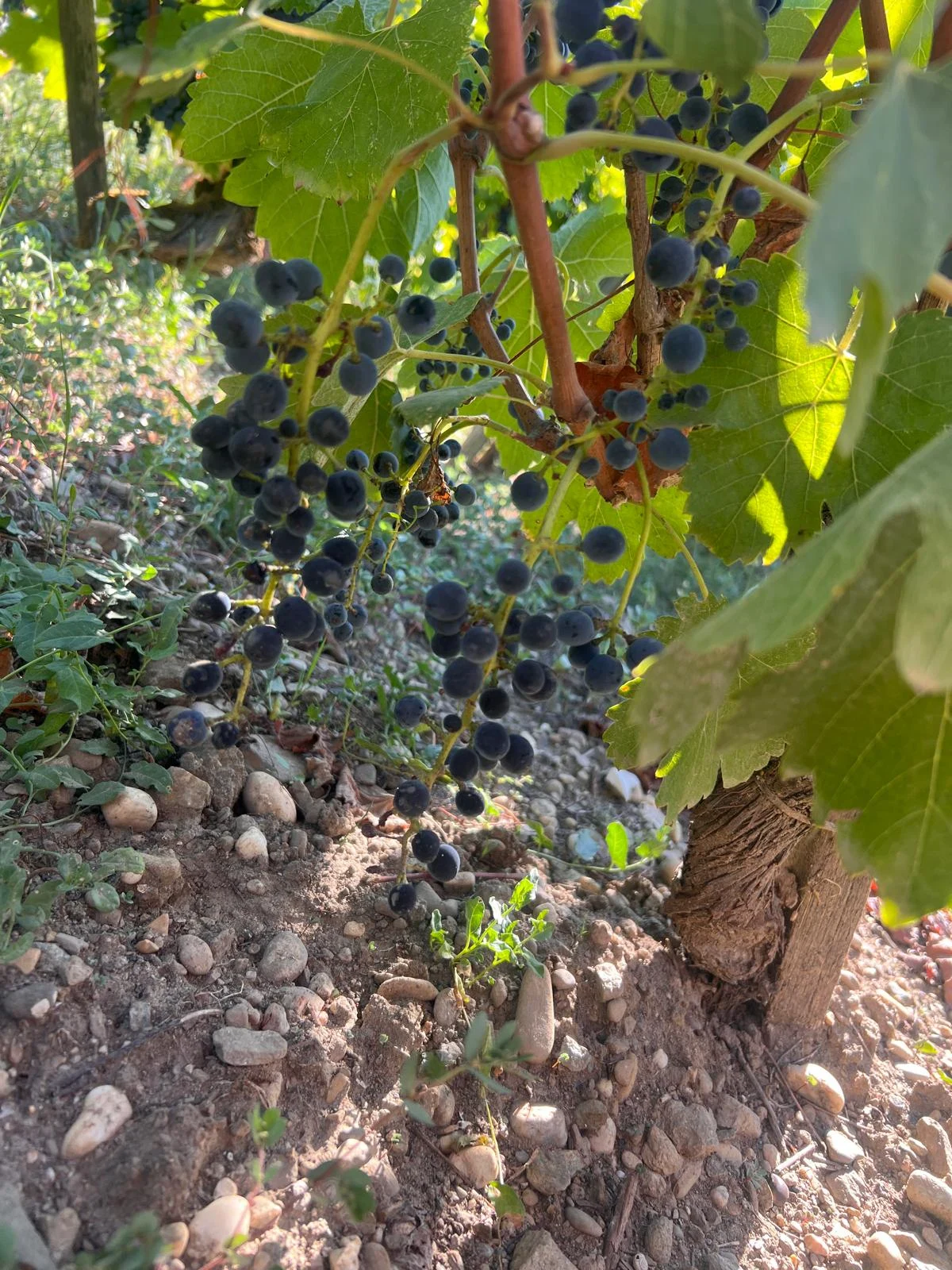
When reading producers’ vineyard descriptions, I used to focus first on the name of the bedrock. Reading Maltman made me more interested in its physical properties. Is it fractured? How does water move through it? Where can roots penetrate?
He identifies water supply as a major pathway through which geology influences vines: excess water needs to drain, while sufficient water must remain accessible during dry periods.[5]
One example he discusses is Coonawarra in Australia. Its famous terra rossa soil is often only about half a metre thick. He suggests that drainage and water storage in the underlying fissured limestone may be a key advantage.
He also cautions that deeper roots chiefly seek water. Their depth does not establish that they collect more geological flavours, or that more complex geology produces more complex wine.[6]
This changes what I want to learn from a geological description. It can help explain the conditions experienced by the vine. Connecting those conditions with the finished wine requires further investigation.
Soil Chemistry Matters Too
Alongside water, Maltman discusses soil pH and nutrient availability.
“Availability” is important here: the amount of an element present in soil is different from the amount accessible to roots. Soil pH affects that accessibility. Elements held within rocks generally need to be released through weathering and enter soil solution before root uptake; vines also regulate their uptake.[6]
Potassium offers a further example. Grapevine research shows that excessive accumulation in berries can raise juice pH and alter acid balance. But berry and juice chemistry should not be confused with soil pH. Potassium uptake and accumulation also depend on rootstock, water status and environmental conditions. A potassium-bearing rock does not, by itself, predict a high-pH wine.[7]
For me, this provides a more specific way to understand the connection: nutrients can change the chemical conditions in grapes and wine, without those changes amounting to the taste of a rock.
What Does “Volcanic Soil” Actually Tell Us?
“Volcanic” describes the origin of geological material. “Alluvial” describes material transported and deposited by flowing water. Neither identifies a single, uniform set of soil conditions.[8]
Those labels alone do not tell us the depth of the root zone, its proportions of gravel, sand, silt and clay-sized particles, or its present structure and water behaviour.
My interpretation of Maltman’s argument is that volcanic soil alone does not justify predicting smoky flavours. Equally, limestone alone does not establish a particular acidity or texture.
These descriptions are worth sharing and investigating. They prompt further questions: what rooting environment has developed from those materials, and how does it affect vine growth and grape ripening?
Old Vines Add Another Question
With these questions in mind, I also read about the Garnachas Históricas project in Spain’s Campo de Borja. The project brought together the appellation organisation, the University of Zaragoza, the Public University of Navarre and other partners to investigate aroma potential and methods of verifying vineyard age.[10]
The aroma research compared historical vineyards with neighbouring younger vineyards across six locations. The project summary describes more similar aroma profiles among younger vineyard samples, while historical vineyards showed more distinctive patterns associated with location.[11]
The original report clarifies the scope. Researchers examined aroma precursors and their potential to release or generate aromatic compounds under laboratory treatment. This was not a blind tasting of wines after years of bottle ageing.
The 2025 report brings together three harvests and identifies substantial vintage effects. The sampled vineyards also differed in management characteristics. It therefore supports more distinctive geographical aroma patterns in these historical vineyards, without isolating vine age—or soil—as the sole cause.[12]
For me, this research can be considered alongside Maltman’s questions: we observe differences, then investigate what produces them.
From listening to my flatmate explain riverside poplars to discussing grapevines with producers today, I have found that trying to understand how a plant grows reveals just how much there is to ask about its surroundings.
That is part of wine’s appeal. One more detail from a producer can lead into plant physiology, geology or chemistry. What we learn then feeds into the next conversation and the next tasting.
I still want to talk about terroir, and I still enjoy the diversity of wines from different vineyards. But next time I mention limestone, volcanic soil or minerality, I want to be clearer about the claim I am making: am I describing a sensation, or explaining where it comes from?
Originally written in Chinese. English translation assisted by AI.
Sources & further reading
[1] Hortobágyi, B., Corenblit, D., Ding, Z., Lambs, L., & Steiger, J. (2017). Above- and belowground responses of Populus nigra L. to mechanical stress observed on the Allier River, France. Géomorphologie : relief, processus, environnement, 23(3), 219–231. DOI: 10.4000/geomorphologie.11748. Source for the opening discussion of black poplar saplings and mechanical stress; this study does not concern grapevines or wine.
[2] Alex Maltman. Aberystwyth University profile. Academic background, vine-growing and winemaking experience, and retirement.
[3] Maltman, A. (2018). Vineyards, Rocks, and Soils: The Wine Lover’s Guide to Geology. Oxford University Press.
[4] Maltman, A. (2025). Musings on Minerals and Metaphors. GuildSomm. The structure of his newer book and sensory metaphors.
[5] Maltman, A. (2015). On the Unstoppable Rise of Vineyard Geology. OUPblog. Geological influences through drainage, water storage and growing conditions.
[6] Maltman, A. (2013). Part 1: Soil Principles. GuildSomm. Roots, Coonawarra, soil water, soil pH and nutrient availability.
[7] Rogiers, S. Y., Coetzee, Z. A., Walker, R. R., Deloire, A., & Tyerman, S. D. (2017). Potassium in the Grape (Vitis vinifera L.) Berry: Transport and Function. Frontiers in Plant Science, 8, 1629. DOI: 10.3389/fpls.2017.01629. Additional context for potassium and juice acidity; this is not research by Maltman.
[8] Maltman, A. (2013). Part 2: Vineyard Geology. GuildSomm. Background on rocks, weathering and sedimentary materials.
[9] Maltman, A. J. (2008). The Role of Vineyard Geology in Wine Typicity. Journal of Wine Research, 19(1), 1–17. DOI: 10.1080/09571260802163998. Indirect geological influences and an unproven direct geochemical influence on wine flavour.
[10] D.O. Campo de Borja. Garnachas Históricas project overview.
[11] D.O. Campo de Borja. University of Zaragoza aroma research summary. The project’s public-facing account of its findings.
[12] University of Zaragoza, Laboratorio de Análisis del Aroma y Enología (LAAE). 25 July 2025. Garnachas Históricas project report, Vendimia 2024. Includes comparisons across the 2022–2024 harvests. See pages 1–2, 11 and 17. This is a project technical report, not presented here as a peer-reviewed journal article.
Cover photo courtesy of Maison Stephan.