I finally had the chance to do a proper tasting of Maison Stéphan yesterday, something I had been looking forward to for quite a while.
There has always been plenty of discussion around this domaine. Some friends love the wines, some call Maison Stéphan the “Prieuré-Roch of the Northern Rhône,” while others simply say they don’t quite understand them. So after this tasting, I wanted to share some of my own impressions.
I also had a good conversation with the domaine about their style and approach to winemaking. I’ll share some of that later in the article.
My first impression in a few words:
Pure · Linear · Floral · Fine tannins · High tension
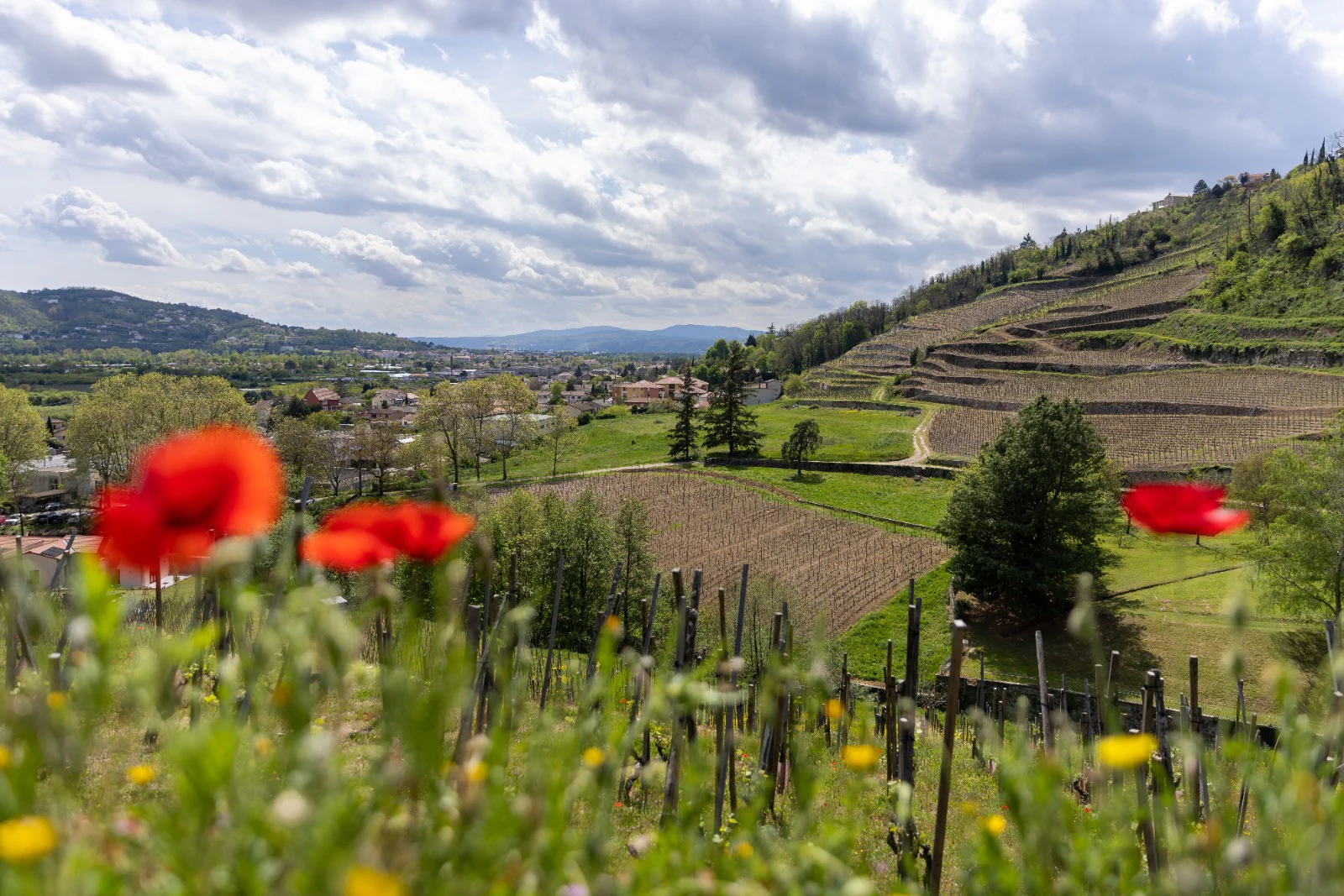
Maison Stéphan has a very natural and modern style. For anyone used to a more traditional expression of Côte-Rôtie, these wines can be quite a surprise. Not because they are trying to be different for the sake of it, but because the expression really is different: lighter on its feet, more floral and energetic, while still retaining the depth and complexity of Côte-Rôtie. The domaine also emphasises that it makes vins de terroir—wines that express the distinctive character of each vineyard site.
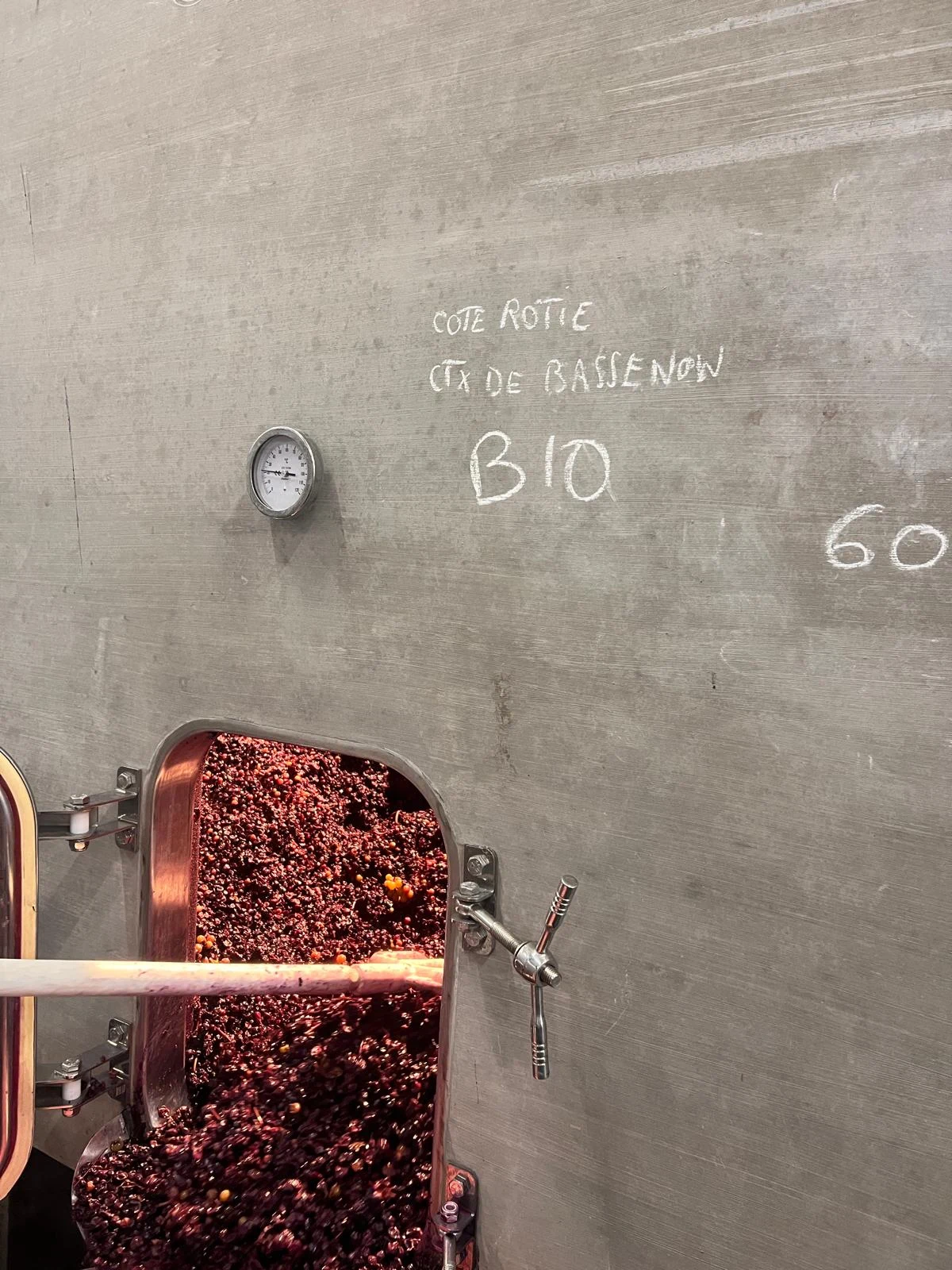
The vineyards are farmed organically and biodynamically, with indigenous yeasts and very little intervention in the cellar. For the reds, cold fruit, destemming and cold semi-carbonic maceration are recurring parts of the approach, while the ageing and details vary from one cuvée to another.
Le Grand Blanc VDF 2024
Roussanne 30% / Marsanne 30% / Viognier 40%
Fresh and light, but with plenty of depth. Citrus, white flowers and a stony mineral character, with good balance and a smooth texture.
The fruit comes from around 2.5 ha of hillside vineyards around Ampuis, Condrieu, Vérin and Roussillon. After cold pressing, the wine ferments with indigenous yeasts in stainless steel tanks, followed by eight months of ageing in stainless steel before fining and filtration.
Even with this entry-level white, you already get a sense of where the domaine is going. It isn’t a big, exuberant style. Everything feels more restrained, fresh and linear.
Syrah VDF 2024
100% Syrah. Not wild, not warm or heavy. It is a very floral expression of Syrah. Fresh and compact, with pure red fruit, spice, a slight reductive character, fine tannins and a clear mineral edge.
The fruit comes from around 2.5 ha of hillside vineyards around Condrieu, Vérin and Roussillon. The grapes are chilled before partial or complete destemming, followed by cold semi-carbonic maceration and indigenous yeast fermentation. The wine then spends eight months in concrete.
By this point, the style of the domaine’s reds becomes quite clear.
Les Binardes 2023
90% Syrah / 10% Viognier
From 0.92 hectares of vines in the lieu-dit Tupin, on slopes with a gradient of around 40%. The name “Les Binardes” comes from the name recorded in the old Napoleonic cadastral register.
A very elegant and lively expression of Syrah. Floral, with pure fruit, medium body, fine tannins and bright acidity. There is a vertical quality to the fruit, with cherry, mineral and pepper notes. Silky on the palate, with a long finish and plenty of pepper at the end.
The same cold semi-carbonic approach and indigenous yeasts are used here, followed by 12 months in concrete.
Coteau de Bassenon 2022
40% Syrah / 40% Serine / 20% Viognier
From 1.7 ha at Coteau de Bassenon in Tupin, on slopes of around 40%. The vines range from 35 to 125 years old, with 40% Serine, an old massale selection of Syrah.
Red cherry, warm spices and a slightly meaty character, with a touch of cherry liqueur. Medium-bodied, with silky, almost creamy tannins. Despite being more substantial, it still has florals and a nice bite running through the palate, with fruit and flowers carrying into a lively, persistent finish.
The winemaking follows the same cold semi-carbonic approach with indigenous yeasts, but Bassenon then spends 24 months in Tronçais oak.
Of the wines tasted, this felt the most solid and substantial overall.
L’Ultime 2021
My personal favourite among the reds.
L’Ultime brings together four sites — Coteau de Bassenon, Coteau de Tupin, Les Binardes and So’Brune — covering 4.5 ha, with vines ranging from 25 to 125 years old.
Concentrated but refined, with a very precise structure. Silky tannins are balanced by mineral acidity, the fruit is pure and deep, and the finish is extremely long. There is plenty of tension and complexity here, but without heaviness.
The fruit is fully destemmed before cold semi-carbonic maceration, with both remontage and pigeage used for extraction, followed by 24 months in Tronçais oak.
Powerful, but not because of weight.
Le Tinal 2023
It was quite closed when first opened and didn’t show its best side immediately. But after around 40 minutes in the glass, it gradually opened up and became a completely different wine — one of the biggest surprises of the tasting.
Definitely not a typical Condrieu.
There is real energy here, with bright acidity, a compact structure and plenty of tension. Lemon peel, verbena, ginger, herbs and spices, plus a slight apple-skin tannic grip.
The finish is fresh. Not oily, not overly perfumed.
Le Tinal comes from a tiny 0.17 ha parcel in Vérin, planted with 100% Viognier doré sélection massale. After cold pressing, it ferments in barrel with indigenous yeasts, without fining or filtration, followed by 12 months in oak from different origins.
One of the biggest surprises of the tasting. A Viognier that is less overtly perfumed, but somehow more interesting and much easier to keep drinking.
A Conversation with Romain Stéphan
Around the tasting, I also had the chance to talk with Romain Stéphan about the domaine’s style and approach to winemaking.
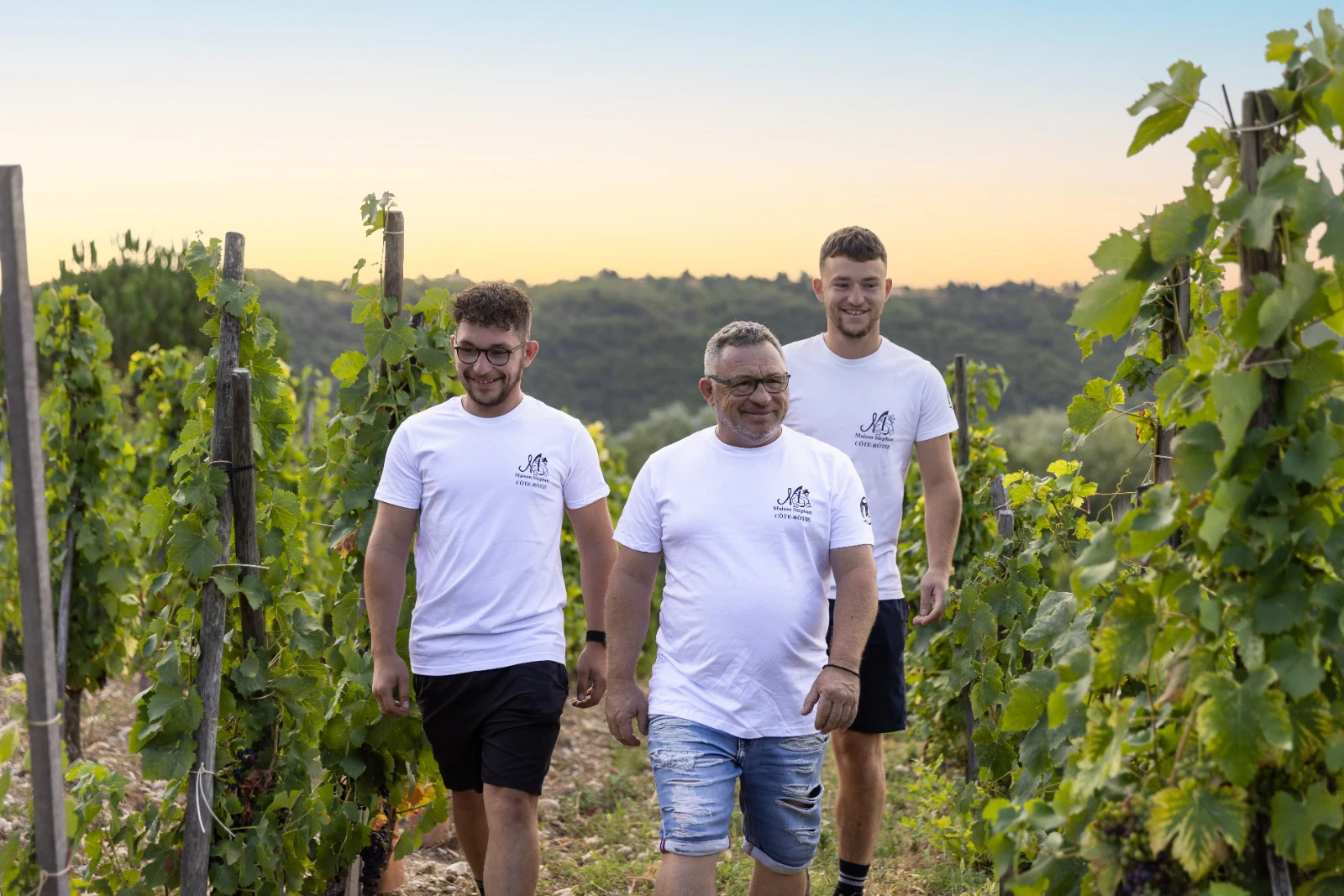
Romain is Jean-Michel Stéphan’s son and joined the management of the domaine in 2017. His younger brother, Dorian Stéphan, joined in 2022. The conversation below was with Romain.
Some French expressions are difficult to translate without losing part of their meaning, so I’ve kept a few of them in French together with my own interpretation.
Me: Many consumers still have a fairly traditional idea of Côte-Rôtie. How would you define your own style?
Romain: More natural and modern. Compared with the heavier, richer style of traditional Côte-Rôtie, we want our wines to feel more modern and natural.
Me: What kind of Côte-Rôtie are you trying to express?
Romain: Vins de digestibilité.
This is one of those French expressions that is difficult to translate precisely. The way I understand it is:
digestibilité = buvabilité + énergie + fraîcheur
Something close to drinkability + energy + freshness.
Traditional Côte-Rôtie can sometimes feel quite heavy and demanding to drink. Maison Stéphan is looking for a more elegant expression of Syrah without losing complexity or ageing potential. The idea is to make wines full of energy that can be enjoyed now, but can also age.
That also helped me understand why some friends had told me they “didn’t get” these wines. They simply don’t taste like the Côte-Rôtie many of us have in our heads.
Me: Is that also why you use semi-carbonic maceration for all the reds? It’s quite unusual in Côte-Rôtie.
Romain: My father lived and worked in Beaujolais when he was young, so he brought some of those methods back with him. The idea is to bring out more floral and fruit character and make a finer, more elegant expression of Syrah.
Me: Of all these reds, which one do you think represents your style best?
Romain: Bassenon & Tupin.
For me, each wine is quite distinctive and has its own personality. I didn’t include Tupin in my first selection simply because I wanted to keep the range more focused at the beginning. There will be time to explore more of the domaine later.
Me: What is the difference between Serine and Syrah?
Romain: Serine is a very old clone of Syrah. The berries are smaller and more concentrated, but the vines are also more difficult to manage and need more attention. We still have Serine vines that are more than 125 years old.
Me: Why use 20% Viognier in Bassenon? That is already quite a high proportion for Côte-Rôtie.
Romain: It’s a relatively powerful wine, so we use more Viognier to calmer le Syrah.
I really liked that expression — essentially, to “calm the Syrah down.” Power, but with a softer side.
We actually talked about much more, from vineyard work to the details of natural winemaking. I’ll share these topics one by one in future articles.
Originally written in Chinese. English translation assisted by AI.