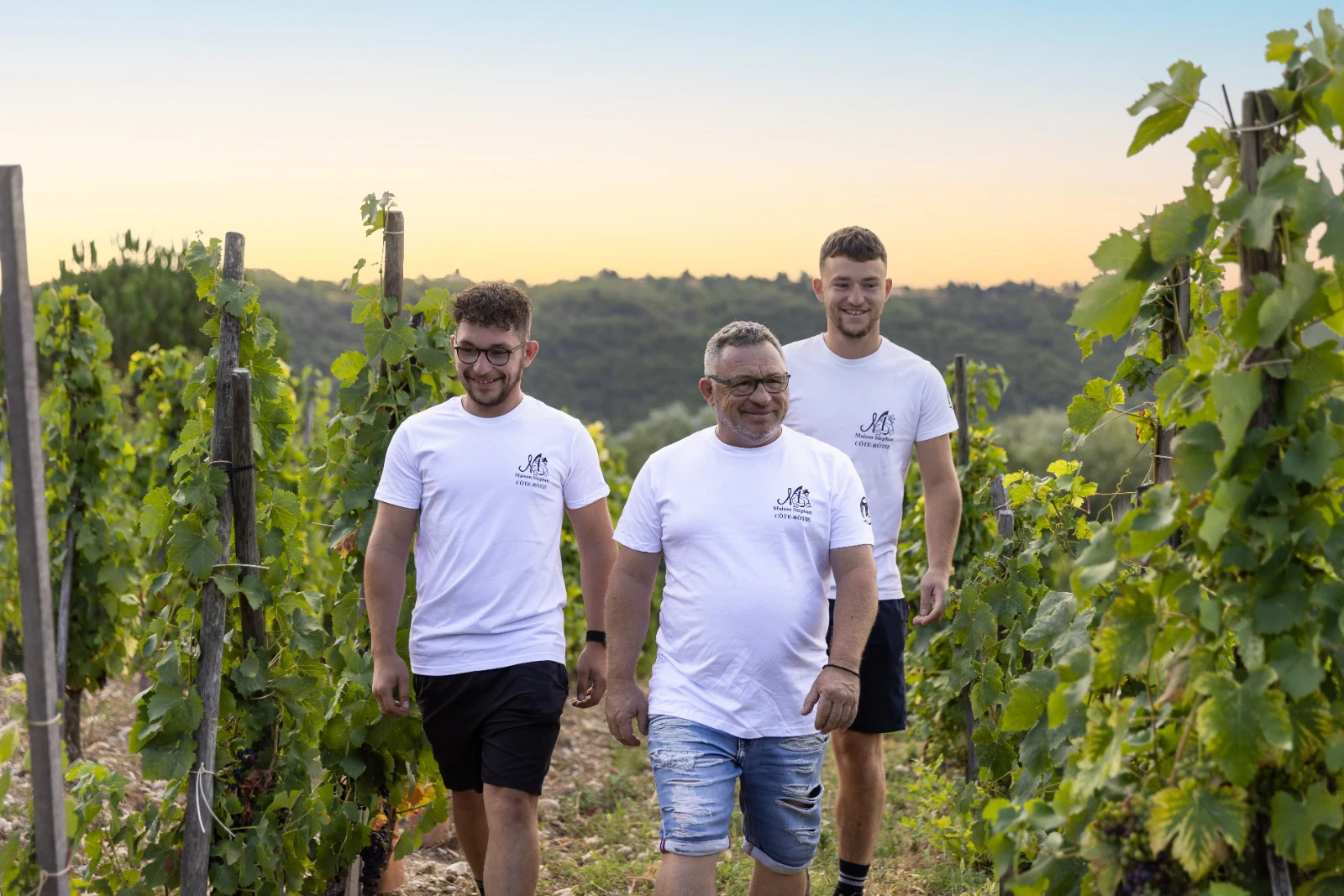
The busy harvest season has finally come to an end. During my meeting with Romain from Maison Stéphan today, I had the chance to catch up on their 2026 harvest.
2026 has been an exceptionally hot and dry year, with several heatwaves throughout the summer. I was curious to understand how different producers had adapted their vineyard practices, and how these decisions influenced grape ripening and harvest timing.
I've kept the conversation in a Q&A format. I think those who have enjoyed Maison Stéphan's wines may also be curious about the practices behind them. And for those learning about wine, some of these vineyard practices and harvest decisions might be interesting to explore as well.
A Hot, Dry Vintage, Helped by Winter Water Reserves
Me: 2026 has been a remarkably hot and dry year. What is your overall impression of the vintage?
Romain: We had quite a wet winter in 2025, which helped build up good water reserves in the soil. This was important for the vines going into the dry summer.
Rainfall was very limited during the summer, particularly in August. Fortunately, a few periods of rain at the end of July came at the right time and provided some relief.
This is a detail we sometimes overlook when discussing a vintage.
We tend to focus on temperatures and rainfall during the growing season, but precipitation from the preceding winter can also play an important role in how vines cope with summer drought.
Of course, how much of that water remains available depends on soil depth, structure, drainage and the depth reached by the vine roots.
Why Grow Cover Crops in a Dry Vineyard?
Me: How did you adapt your vineyard management to the heat and drought this year?
Romain: One of our priorities was to reduce competition for water between the vines and other vegetation.
At the beginning of June, we rolled the féverole (field beans) growing between the vine rows. The flattened vegetation was left on the soil surface as a natural mulch (paillage), helping to conserve soil moisture.
This helped answer a question I've had for quite some time.
Many producers talk about the benefits of cover crops: reducing soil erosion, improving soil structure, encouraging biodiversity and supporting nutrient cycling, among others.
But I've always wondered how this works in a particularly hot and dry year.
Cover crops need water themselves, so they can compete with the vines for limited soil moisture. In a year like 2026, with several intense heatwaves, how can a producer maintain the benefits of vegetation while reducing that competition?
What became clearer through my conversation with Romain is that cover crop management is not simply about allowing vegetation to grow throughout the year.
The timing of each intervention matters.
Take field beans, for example. They can be sown in autumn and allowed to grow through winter and spring. Their roots help protect the soil against erosion, while the plants, being legumes, can fix atmospheric nitrogen through their association with root bacteria.
By late spring or early summer, however, the situation changes.
As temperatures rise and rainfall becomes more limited, living cover crops continue to use soil moisture and may compete with the vines.
Rolling them at the appropriate growth stage can suppress further growth while leaving the plant material on the surface.
As the flattened vegetation dries, it forms a layer of mulch, rather like straw. This helps shield the soil from direct sunlight and reduce evaporation.
There are therefore two main objectives: reducing water consumption by the living cover crop, provided its growth has been successfully terminated, and limiting evaporation from the soil surface.
Over time, the roots and decomposing plant material may also help improve soil structure and water infiltration.
But timing is essential.
If the cover crop is rolled too early, it may regrow. If it is rolled too late, it may already have consumed a significant amount of soil moisture. Even successful termination cannot recover the water used earlier in the season.
So early June is not a universal date for this practice. It was a management decision made by Maison Stéphan according to the conditions of the year.
What I found particularly interesting is that vineyard management is not just about choosing the right practice. Knowing when to intervene can be just as important.
The Vines Remained Green Through the Heat
Romain: Alongside cover crop management, we also used biodynamic preparations 500 and 500P.
From what I observed, the vines maintained healthy green foliage during the later periods of intense heat.
Preparation 500, traditionally known as bouse de corne or horn manure, is made from cow manure processed according to biodynamic methods. Preparation 500P is a variation incorporating additional biodynamic compost preparations.
Both are used as part of biodynamic soil management.
Romain associates these practices with the relatively good condition of the vines during the heat.
From a physiological perspective, severe water stress can cause vine leaves to yellow, dry out or fall prematurely. Healthy green foliage after periods of intense heat is therefore an interesting observation.
However, green leaves alone do not mean that the vines experienced no water stress, nor can this observation establish the specific effect of a biodynamic preparation.
I find the long-term observations of growers who know their parcels particularly valuable, while also recognising the difference between field observations and scientifically established cause and effect.
Less Leaf Removal to Protect the Grapes
Romain: We also reduced leaf removal this year, keeping more foliage around the bunches.
In hot conditions, this provides some natural shading, helping to protect the berries from excessive sun exposure, sunburn and shrivelling.
We wanted to avoid the grapes drying out too much and losing too much aromatic intensity.
Leaf removal (effeuillage) is a common vineyard practice. It can improve airflow and light exposure around the bunches, particularly useful in wetter conditions when disease pressure is higher.
But in a hot, dry vintage, excessive exposure brings a different risk.
Direct sunlight and high temperatures can cause sunburn, while severe water loss may lead to berry shrivelling and changes in aromatic expression.
This year, Maison Stéphan chose to retain more foliage around the fruit.
It is another example of how a vineyard practice that makes sense in one vintage may need to be adapted in another.
Overall, despite the heat, Romain's aim was to preserve freshness and acidity in the wines, rather than simply pursuing higher ripeness or concentration.
August 28: Starting with Condrieu
Me: When did you start harvesting this year, and when did you finish?
Romain: We began with Condrieu on August 28.
At that point, more hot weather was forecast. Waiting longer could have pushed ripeness and potential alcohol levels further.
But for our Condrieu, we are looking for freshness and tension, while maintaining a balance between acidity and alcohol.
Our Condrieu parcel is also relatively small, so the team was able to organise and complete this first stage of the harvest quite quickly.
I think this is a particularly revealing detail about the style Maison Stéphan wants to achieve with its Condrieu.
Made from Viognier, Condrieu can develop expressive floral and fruit aromas. But in warm conditions, sugar levels may rise quickly, while acidity can decline as ripening progresses.
The decision of when to harvest is therefore not simply about whether the grapes have reached sufficient ripeness. It is also about the balance the producer wants in the finished wine.
Romain's choice of the words fraîcheur and tension is particularly interesting here.
Fraîcheur refers to the overall impression of freshness, while tension suggests a sense of precision, structure and energy on the palate. It is not necessarily synonymous with high acidity alone.
For Maison Stéphan's Condrieu, the intention is to preserve freshness and structure alongside Viognier's ripe aromatic expression, rather than allowing high alcohol or excessive ripeness to dominate.
This helps explain why the team chose to begin harvesting on August 28, with more heat still forecast.
Moving Through the Different Parcels
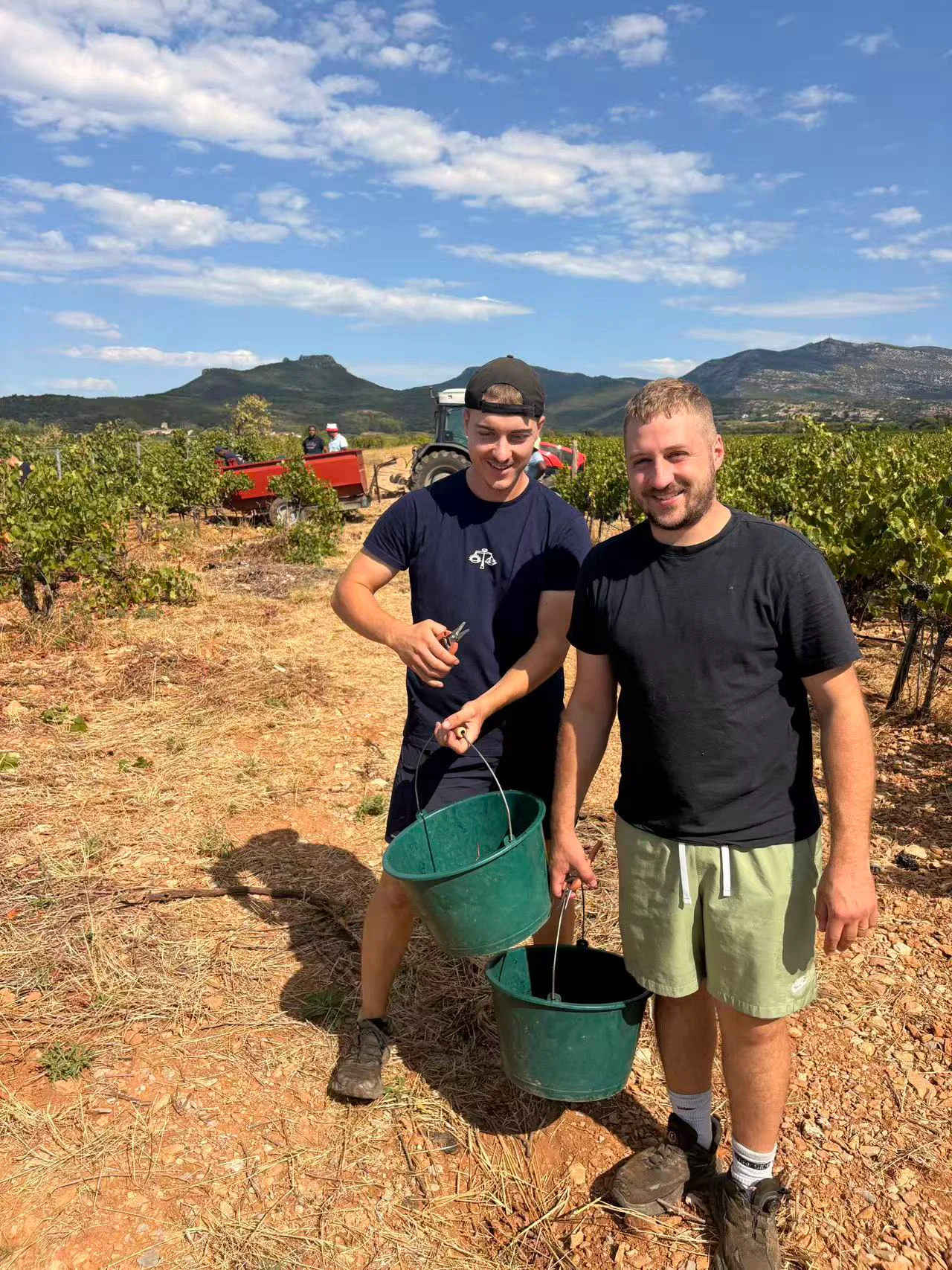
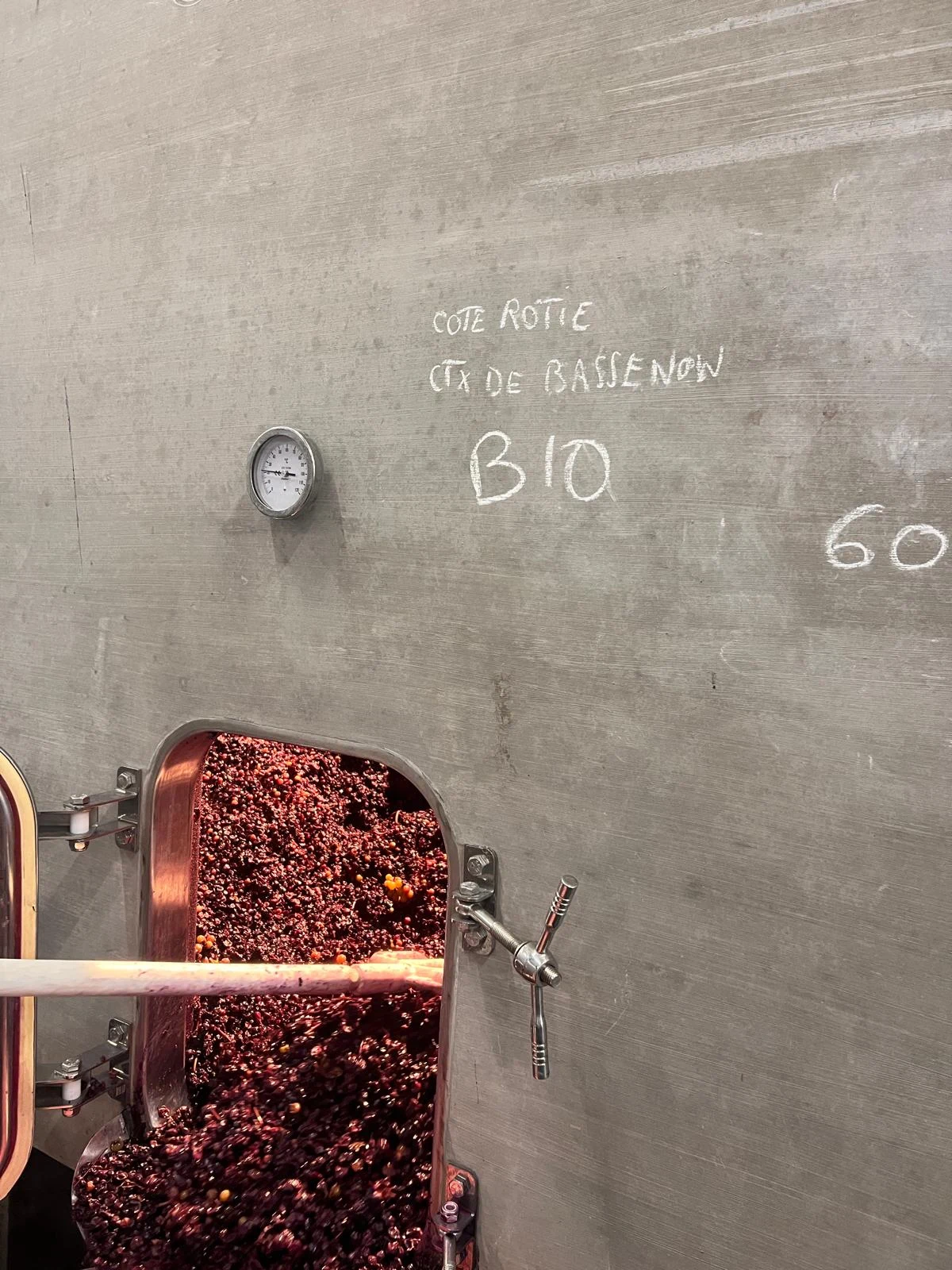
Romain: On September 1, we began harvesting Coteau de Bassenon, followed by Tupin, Binardes and So'Brune, then the Vin de France Syrah and white wine parcels.
We finished around September 11, completing the harvest over roughly two weeks.
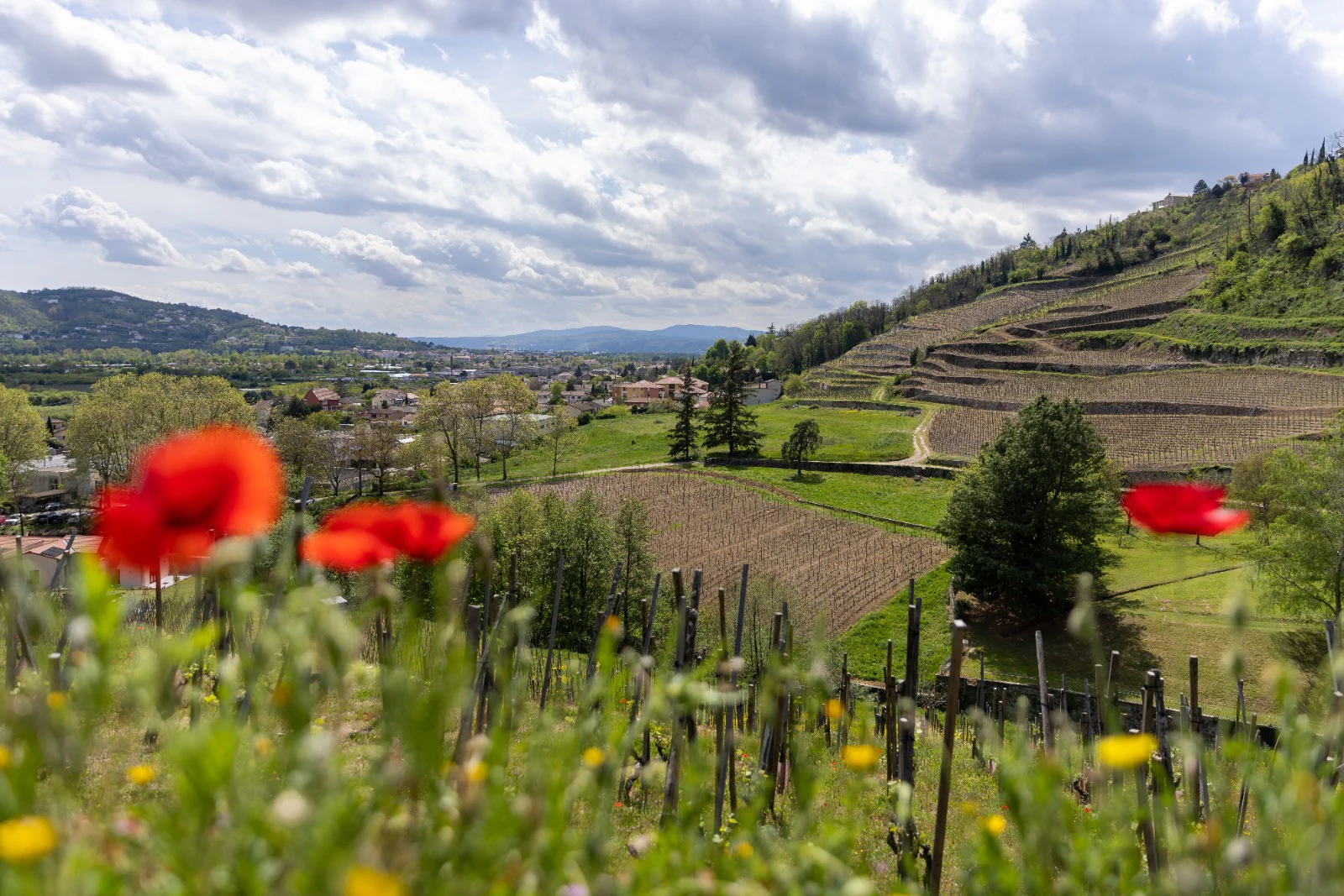
Maison Stéphan works with several distinct parcels in Côte-Rôtie, and preserving their individual character remains central to the domaine's approach.
Me: Did any particular parcel behave very differently this year? For example, did some cope better with the heat, or show a noticeably different ripening pattern?
Romain: We didn't observe one parcel showing significantly greater changes than the others in 2026.
Our goal is always to preserve the individual character of each Côte-Rôtie and allow the different terroirs to express themselves, rather than producing wines with the same style.
This is something I've always appreciated about Maison Stéphan.
The aim is not simply to produce a wine that represents Côte-Rôtie in a general sense, but to allow the individual character of each parcel to come through.
Bassenon, Tupin, Binardes and So'Brune are not merely different names in the portfolio. For the domaine, they represent distinct vineyard origins, each with its own identity worth preserving.
Even in a vintage as hot and dry as 2026, Romain continues to emphasise this approach.
Looking Ahead
The 2026 wines are still in the cellar, so it is far too early to draw conclusions about their final character.
But this conversation gave me a much clearer picture of the vintage.
From the water reserves built up during winter, to rolling cover crops in early June; from retaining more foliage during the heat, to carefully considering the ripeness and potential alcohol of Condrieu at the end of August, each decision was made in response to the conditions of the year.
These practices cannot completely eliminate the effects of heat and drought. But they show what the producer is trying to preserve, and the choices made along the way.
Rather than simply describing 2026 as a hot vintage, I'm looking forward to tasting the wines and connecting what is in the glass with the vineyard and harvest decisions discussed today.
We'll also be adding a few new wines from Maison Stéphan to our portfolio, and I'm looking forward to sharing them with you in the coming months!
Originally written in Chinese. English translation assisted by AI.
Sources & further reading
Conversation with Romain from Maison Stéphan, October 8, 2026.