From Ripening Challenges to Heat and Drought
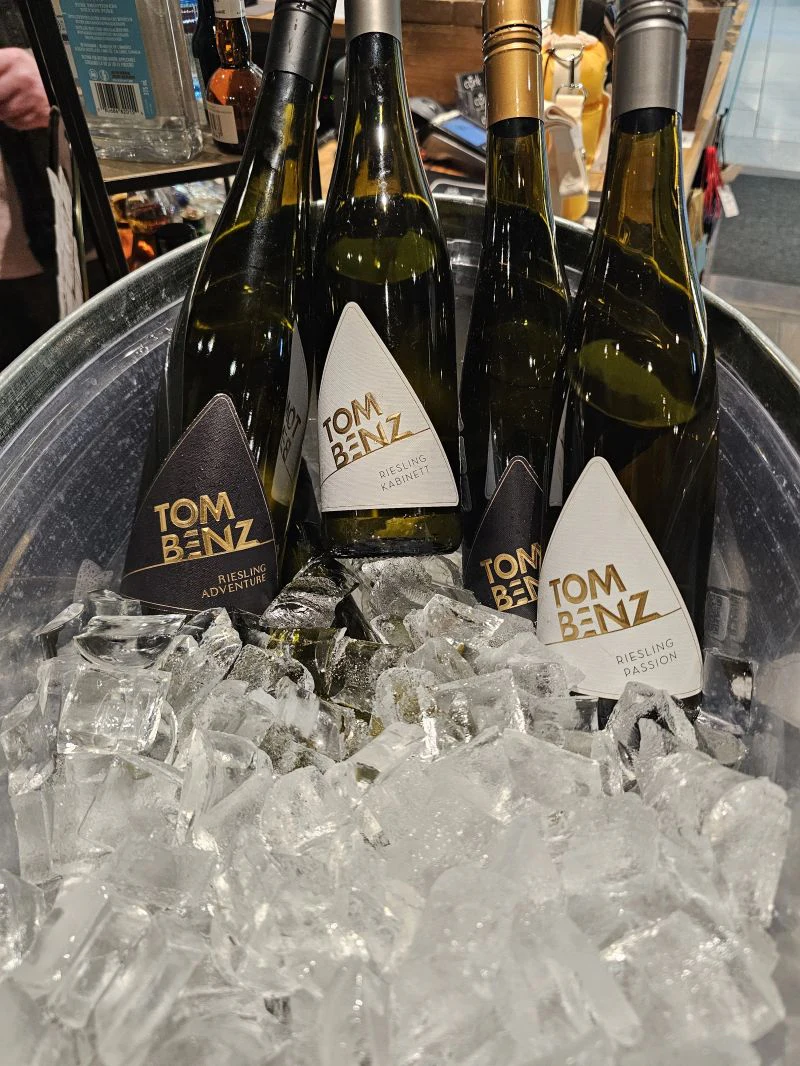
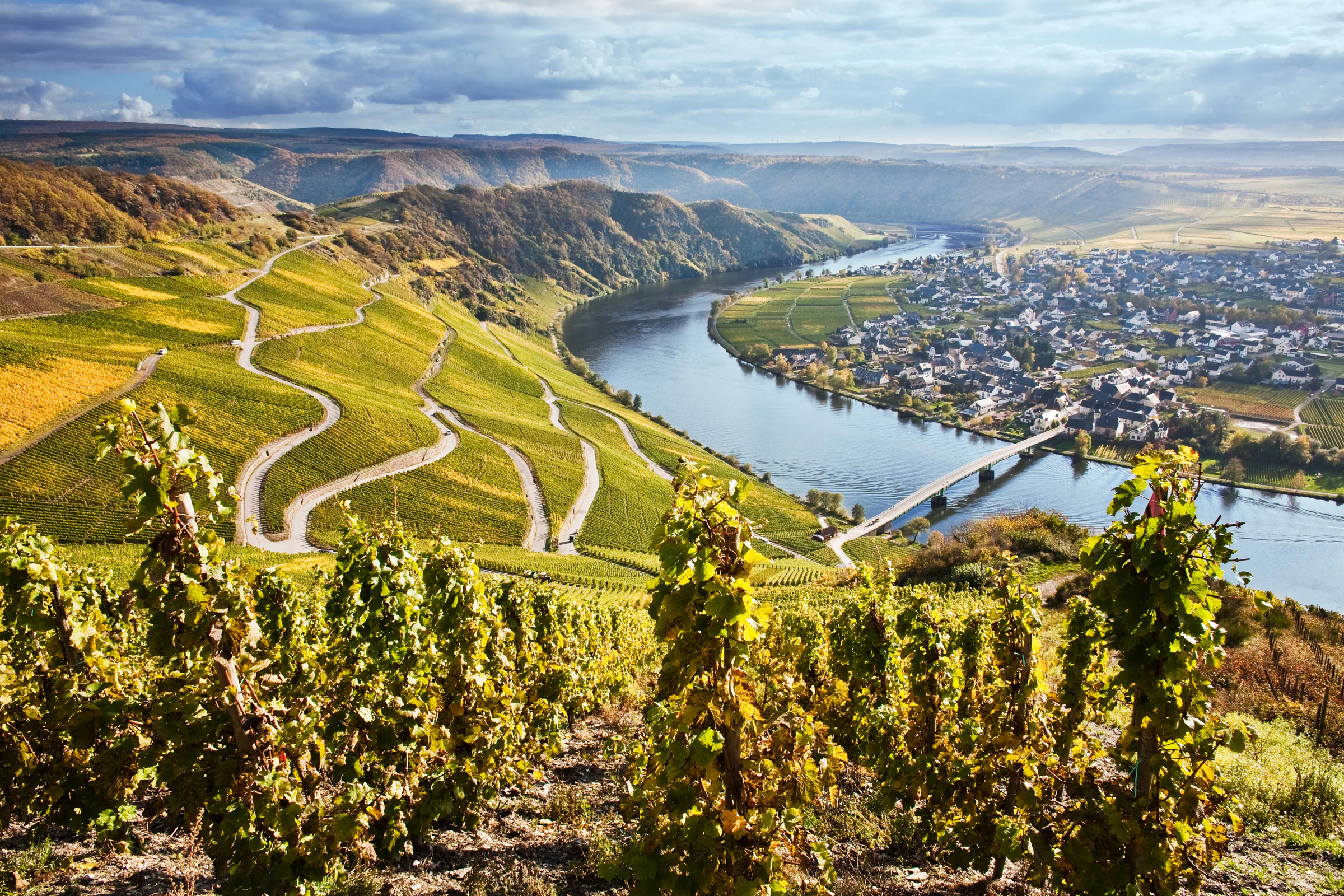
Earlier this year, I was chatting with Tom Benz about climate change in the Mosel. He mentioned that, in some ways, warmer conditions have actually helped local growers. Achieving full ripeness, once a regular challenge, has become less difficult. Warmer temperatures have also made it possible to experiment with red varieties that would once have seemed unlikely in the Mosel.
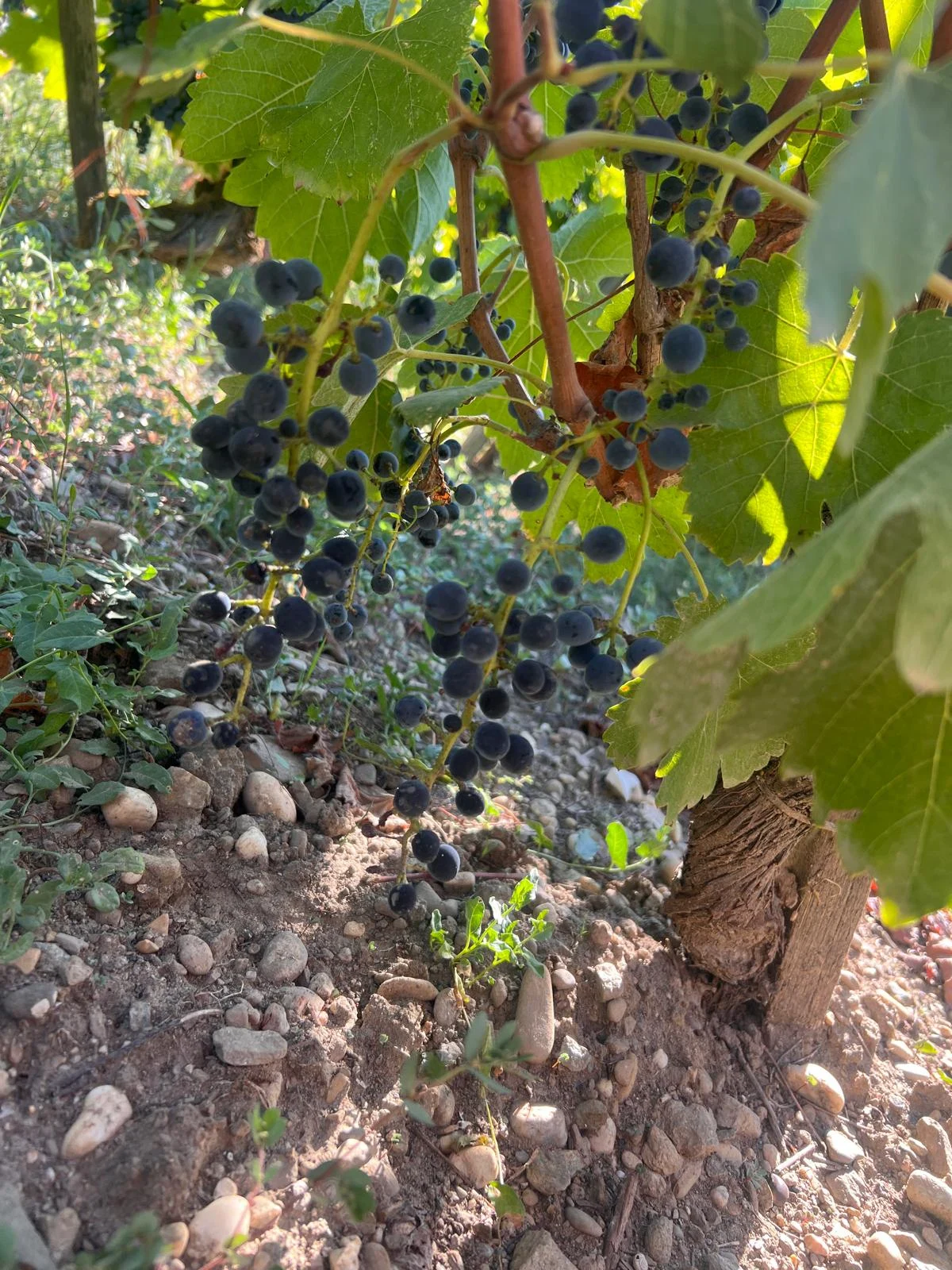
Tom has planted Cabernet Sauvignon on a small, very steep site of pure slate in the Minheimer Günterslay. He told me that in summer, the surface of the slate can reach temperatures of up to 60°C. Under these conditions, even Cabernet Sauvignon can achieve ripeness. From this perspective, climate change seems to have opened up new possibilities for a traditionally cool wine region.
But further north in the Middle Rhine, the situation is no longer quite so simple. I recently read a report about a grower in Spay who spread nearly 1,000 bales of straw between the rows of around one-third of his vineyards this year to reduce water loss. He also uses drip irrigation across 1.85 hectares. What struck me most was his comment that he would no longer plant young vines where irrigation was not available, because their root systems are not yet deep enough to access sufficient water during prolonged drought. For growers, the issue is no longer simply how much fruit they will harvest that year, but whether young vines can make it through their first few years at all.
This challenges some of the assumptions I used to have about German wine regions. For a long time, Germany was often presented as one of the potential beneficiaries of climate change: grapes could ripen more reliably, a wider range of varieties became possible, and places that had previously been marginal for viticulture became more suitable. But the story seems to be entering a different phase. The German Wine Institute has noted that harvest in Germany can now begin around four weeks earlier than it did three or four decades ago. Ripeness may no longer be the challenge it once was, but heat, drought and access to water are becoming much more important.
I was reminded of the same issue much closer to home this August, when I cancelled a planned trip to the Okanagan because of the major wildfires. The Bald Range wildfire forced more than 20,000 people to evacuate. At Giant Head Estate Winery in Summerland, around 14 tonnes of grapes were still on the vine when owner John Glavina had to evacuate. He estimated the crop was worth around C$45,000.
Even when a vineyard is not directly damaged by fire, the consequences do not end there. There is the risk of smoke taint, winery closures, and the sudden disappearance of visitors during what should be one of the busiest periods for wine tourism. All of these can affect not only a vintage, but the business of a winery for the entire year.
So when we talk about climate change today, I think the issue is no longer simply “global warming.” The greater challenge is the increasing frequency of extremes and the difficulty of predicting them. A little more warmth may once have been helpful for Riesling; heat combined with water stress is a very different situation. Vines can adapt, and growers can change the way they work, but adaptation comes at a cost: irrigation, soil cover to retain moisture, changes in vineyard management, earlier harvests, and sometimes a much bigger question about where vines should be planted and what should be planted there. Wildfires are another reminder that the idea of a “vintage” can no longer be reduced simply to how well the grapes ripened that year.
We used to hear that cool-climate wine regions might benefit from climate change. Today, I think that idea deserves another look.
Wine Regions Change, and So Does Our Understanding of Wine
Learning about wine is much the same. We cannot rely only on fixed descriptions of the Mosel, Rioja or any other region in books, because the regions themselves continue to change.
Take Rioja Reserva and Gran Reserva. In 2017, Rioja revised some of its ageing requirements. For red Gran Reserva, the previous rules required at least 24 months in oak followed by at least 36 months in bottle. Under the revised rules, the wine must still be aged for a minimum of 60 months in total, including at least 24 months in oak and at least 24 months in bottle, giving producers greater flexibility over the remaining ageing period.
It may look like a small technical change, but in a broader context it also reflects how Rioja has been responding to changes in the market and in the fine wine world. Rioja's identity was historically defined to a large extent by how long a wine was aged. Fine wine today, however, is about far more than meeting an ageing requirement.
This is perhaps a little far from where I started, but that is really the point. Wine is constantly changing. The climate changes, regions evolve, regulations are revised and growers make different decisions, often faster than books can be updated.
Even some of the most basic ideas in wine continue to be reconsidered. Recently, I have been reading the work of British geologist Alex Maltman, a former professor of earth sciences at Aberystwyth University who has written extensively about the relationship between geology and vineyards. Last year he published Taste the Limestone, Smell the Slate: A Geologist Wanders Through the World of Wine.
The title itself touches on some of the language we use almost instinctively in wine: limestone, slate and minerality. Maltman's point is not that geology and soil do not matter, but that the relationship between rocks, soil, vines and what we eventually taste in the glass is far less direct than it is sometimes presented. As research in geology, plant physiology, wine science and other fields continues to develop, our understanding of terroir, where wine flavours come from, and how we describe them continues to develop as well.
Climate change is changing the way grapes are grown, while new research continues to deepen our understanding of wine and the many disciplines behind it.
Perhaps that is why wine always feels like something we can never finish learning. It touches so many different fields, and there is always something new to explore.
Sources
• Information on drought, straw mulching, irrigation and young vines in the Middle Rhine: AFP interview with a winegrower in Spay, August 2026; additional reference to vineyard and drought observations published by Weingut Weingart in August 2026.
• Changes in German harvest timing: comments by Ernst Büscher of the German Wine Institute (Deutsches Weininstitut), reported in 2026.
• Bald Range wildfire evacuation figures and information on Giant Head Estate Winery: AFP, August 2026, as reported by La Revue du Vin de France / Le Figaro Vin.
• Rioja Gran Reserva ageing requirements: Consejo Regulador DOCa Rioja / regulatory changes introduced in 2017.
• Alex Maltman, Taste the Limestone, Smell the Slate: A Geologist Wanders Through the World of Wine, Académie du Vin Library, 2025.
• Comments from Tom Benz regarding climate change in the Mosel, the Minheimer Günterslay slate site, summer slate surface temperatures and Cabernet Sauvignon are based on the author's personal conversations with the grower.
Originally written in Chinese. English translation assisted by AI.